What the photographs do not say
A city garden is not a lawn
Eleven hundred square feet behind a house in Queens, with a brick wall and an elevated railway four minutes away. What it is good for, and what it is not.
What "garden" conjures, and what this one actually is
The word does a lot of quiet work in a listing: it suggests grass, distance from the neighbours, and a view of something other than another building. Behind a house on 61st Street in Woodside, none of that arrives automatically, and describing it honestly matters more here than almost anywhere else on this site, because a garden is the single easiest thing for a photograph to flatter.
A garden idiom carried over from a country house or a suburban yard sets an expectation this one was never built to meet, and it is worth naming that gap before the facts rather than after them: this is a Queens back garden behind a 1912 house, shaped by a party wall on each side and a working railway four minutes away, not an acre with a hedge at the end of it.
The facts
- Aspect
- South and west. It is in sun from about eleven in the morning until the roofline takes it at six in the evening.
- Surface
- Brick paving over the terrace nearest the house, and grass beyond it. The grass is not a lawn in February.
- Seating
- A table that seats ten under the pergola, and stacking chairs for twenty more in the garden store.
- Boundary
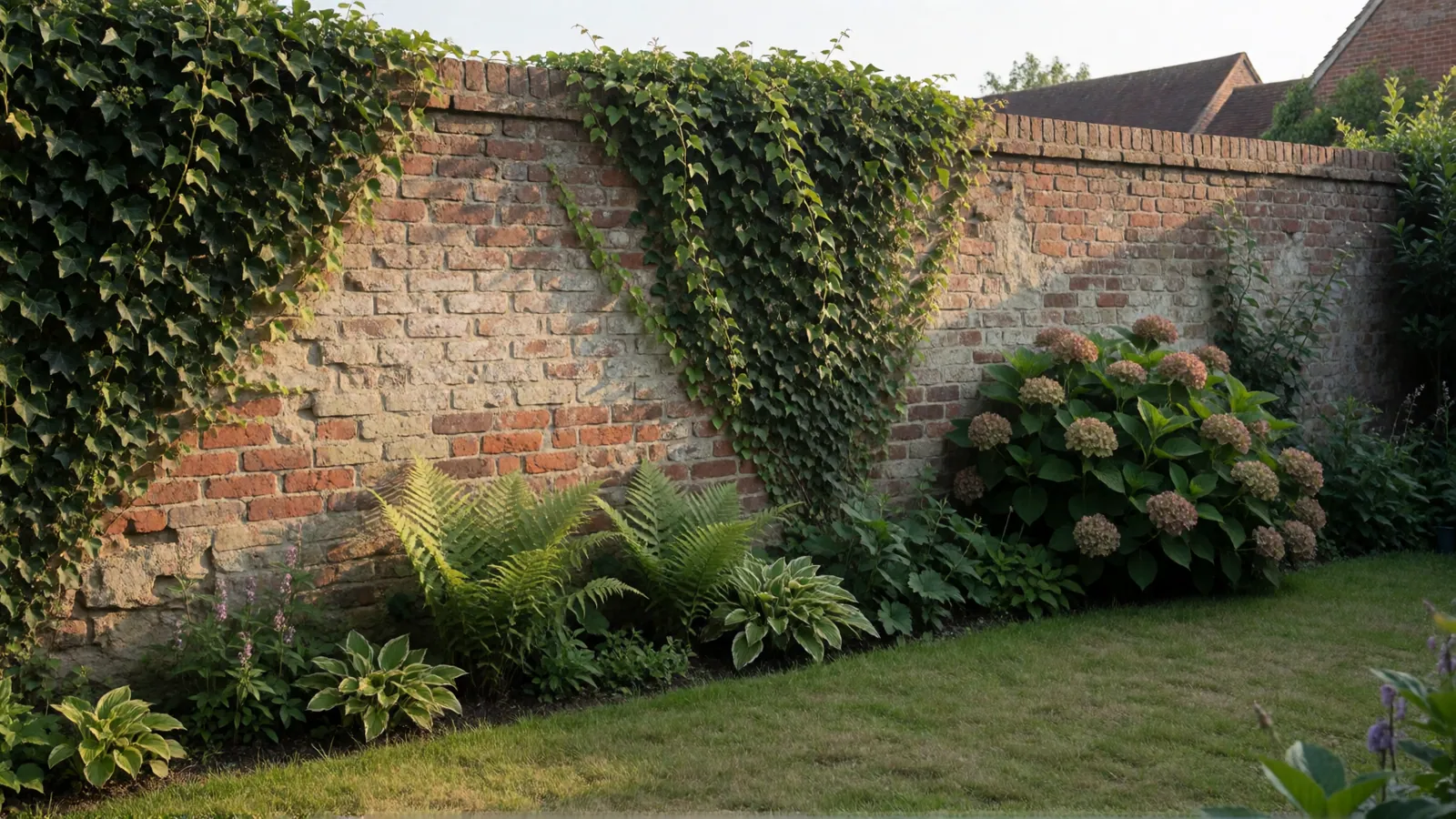
- A brick wall on three sides, about seven feet, which is what makes it quiet.
- Cooking
- A charcoal grill, which is the only fire permitted in the garden. No fire pit, no pizza oven and nothing propane.
- Lighting
- Festoon lighting on the pergola and along the wall, on a timer that goes off at eleven.
- Access
- Level from the garden apartment. Down an external stair of eight steps from the parlour floor.
Read against each other, those rows describe a genuinely usable outdoor room for most of the year, bounded on three sides by brick rather than by anything resembling open country, cooking limited to a single charcoal grill rather than an open flame of any kind, and lighting that switches off at a fixed hour rather than staying on into the night.
The honest description
It is a city garden behind a house in Queens, not a lawn in the country. The elevated line is four minutes' walk away and you can hear it. Between December and the middle of April the garden is closed, the furniture is in store and the terrace is swept but not heated.
Both halves of that sentence matter equally. The elevated line is audible here in a way no amount of planting changes, and for roughly four months of the year the garden is not part of the offer at all — furniture in store, the terrace swept but not heated, nothing about it available to book around. A guest choosing a date in February on the strength of a summer photograph would be booking a different garden from the one actually there that week.
Why only a charcoal grill, and why the wall matters twice over
The single-grill rule is not a preference dressed up as a policy; a pergola built of timber, sitting against a neighbour's own wall on one side, is not a place to introduce an open flame beyond the one contained appliance the garden is built around. The same brick wall does two jobs at once: it is what keeps the space feeling private rather than overlooked, and it is also most of what keeps the sound of a garden dinner from becoming the neighbours' problem. Losing either job would change what the garden is allowed to be used for, not just how it looks.
What it is good for
For most of spring, summer and early autumn, it does exactly what a garden is supposed to do: it seats a family at the long table under the pergola, it gives a wedding somewhere to hold a ceremony that is not the parlour, and it lets an apartment guest step outside their own door without going anywhere near the street. The festoon lighting reaches into the evening, on a timer rather than left to run all night, and the brick walls that make it feel enclosed are the same walls that keep it reasonably quiet.
It is also the fact that makes the house's largest seated number possible at all: the parlour on its own seats a fraction of what the parlour and the garden seat together, so a fair-weather date genuinely changes what kind of gathering the house can hold, not merely how pleasant it feels. What that larger number actually depends on is its own piece, built around the same distinction.
What it is not
It is not a lawn to run across, not a space that absorbs an open flame of any kind beyond the one grill permitted in it, and not a guaranteed backdrop for a date booked months ahead in a season where the weather cannot be predicted. Nothing on this site promises otherwise, and any event that depends on the garden being usable should plan its numbers around the indoor capacity as the real one, with the garden as the improvement a fair day brings rather than the plan itself. The garden's own page carries every one of these facts again alongside the photographs, and a family gathering shows what a day actually looks like when the garden cooperates.
Where this bears
The pages this argument touches
Check the dates you want
The calendar is live. It shows what is free, it will not sell the same night twice, and it prints the whole total — cleaning fee included — before it asks for a name.